-
Selfish Mining in PoW Blockchains

Collaborators: Prof. Show-Shiow Tzeng, Prof. Li-Chun WangThis research investigates selfish mining behavior and its security implications in proof-of-work blockchains, using stochastic processes and Markov chain models to analyze profitability under different network conditions. It further considers multiple selfish miners, sharded architectures, and lightweight blockchain environments, demonstrating that conventional security thresholds may underestimate real-world risks and providing a theoretical foundation for protocol design and defense mechanisms. -
DAG-based DLTs
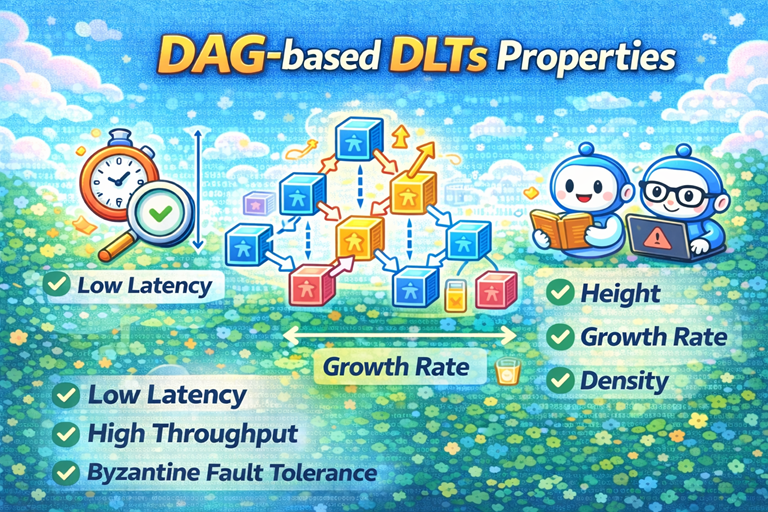
Collaborators: Prof. Show-Shiow TzengIn recent years, DAG-based distributed ledger systems have emerged as a promising approach to improving blockchain scalability. However, existing studies largely focus on specific protocols or simulation-based comparisons, leaving their structural properties under stochastic growth insufficiently understood. This research models DAGs as stochastic dynamic systems, investigates the evolution of key metrics such as transaction height, growth rate, and node density, and develops an extensible theoretical framework for systematic analysis. -
Distributed Consensus in Blockchains
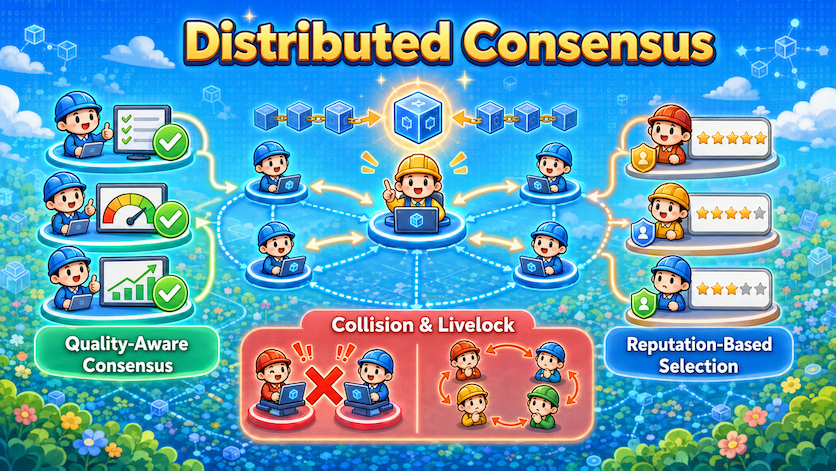
Collaborators: Prof. Show-Shiow Tzeng, Prof. Li-Chun WangThis research focuses on distributed consensus mechanisms and explores how proposal quality evaluation and reputation-based leader selection can improve the decision quality and operational efficiency of PBFT-based protocols. It also analyzes and mitigates safety and liveness issues arising from low-quality proposals, collisions, and livelocks. -
Scalability of Blockchains
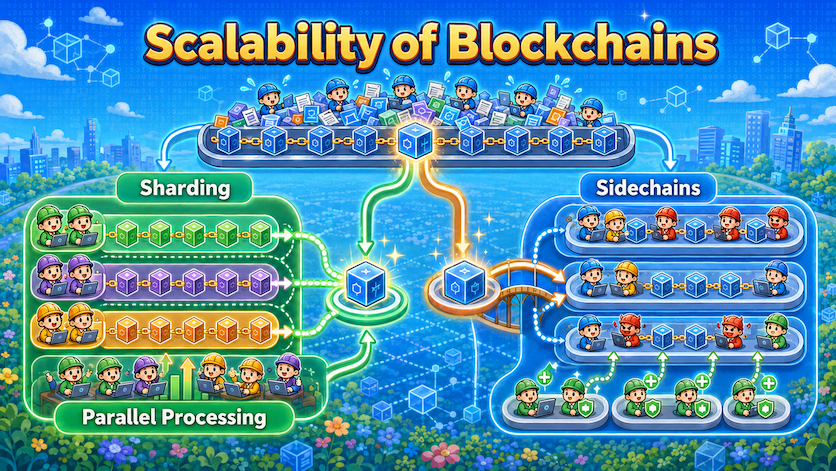
Collaborators: Prof. Show-Shiow Tzeng, Prof. Li-Chun WangOur research focuses on blockchain scalability through sharding and sidechains. We explore parallel transaction processing, flexible workload distribution, cross-chain coordination, dynamic participation, and Byzantine resilience to improve system capacity while maintaining security. -
Age of Information in Wireless Networks
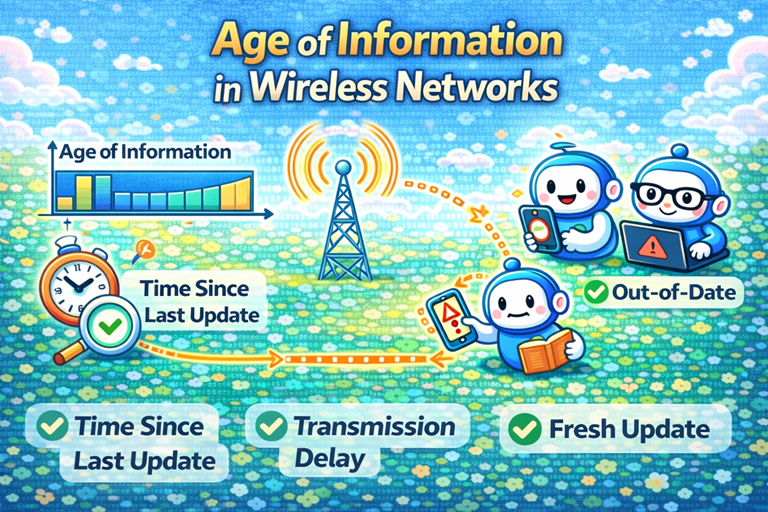
Collaborators: Prof. Show-Shiow TzengAge of Information (AoI) has become a key metric for evaluating information freshness in real-time status update systems, particularly in sensor networks, the Internet of Things (IoT), and real-time monitoring applications. In multi-node random-access environments, collisions, retransmissions, and successful transmission probabilities in Slotted ALOHA directly affect update packet delivery and, consequently, AoI performance. Therefore, understanding how access probabilities, network size, and packet management strategies influence AoI is essential for designing freshness-oriented communication systems. -
Emerging Networks
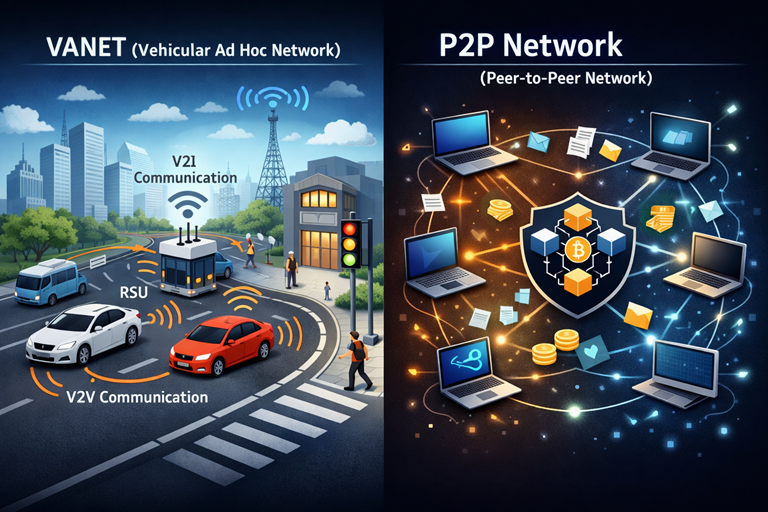
Collaborators:Beyond blockchain, wireless networks, and optical networks, our laboratory also investigates performance analysis and algorithm design for other network architectures. Our research covers roadside unit deployment in vehicular ad hoc networks (VANETs), performance enhancement of peer-to-peer file sharing over ADSL networks, and community detection in social networks. Through these studies, we continue to explore performance optimization and system design across diverse networking environments. -
Optical Networks
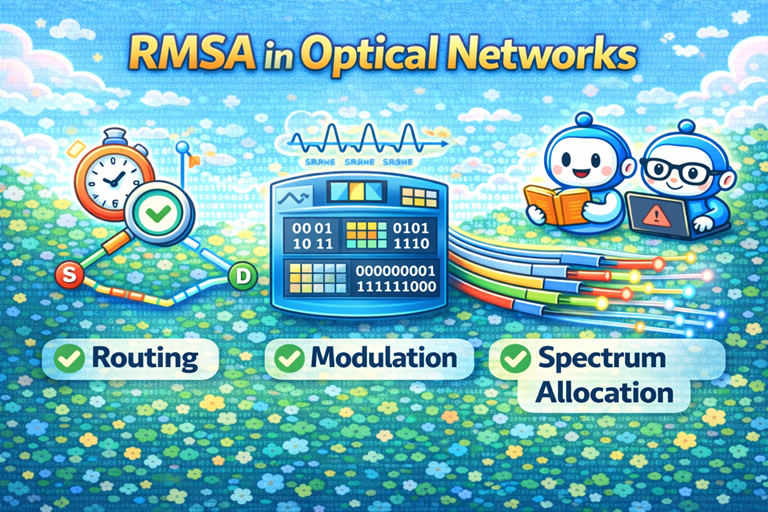
Collaborators: Prof. Hwa-chun LinOptical networks provide high-speed, high-bandwidth communication, with lightpaths serving as their primary transmission medium. All-optical networks transmit data without optical-to-electrical conversion but require wavelength continuity along an entire lightpath. If no route with a common available wavelength can be found between the source and destination, the connection cannot be established. Therefore, routing and wavelength assignment are essential research topics in optical network design. -
System Developments
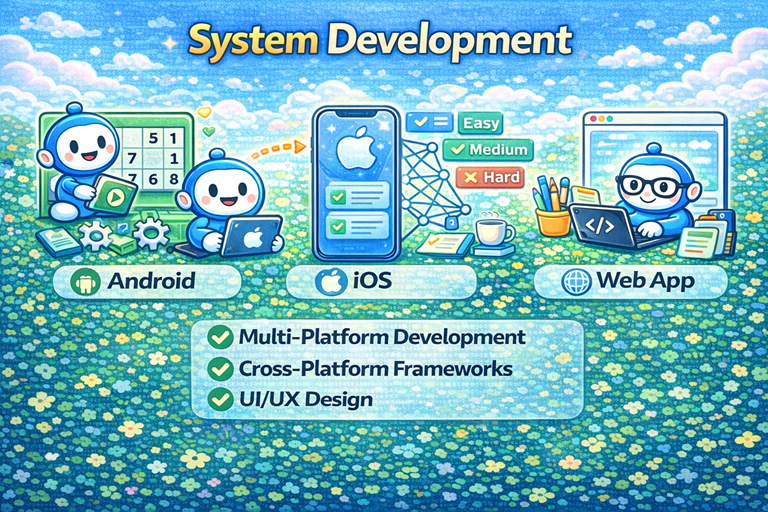
Collaborators: Prof. Wei-Lun Lin, Prof. Sheng-Hsiang Yu, Prof. Wen-Wei Hsieh, Prof. Ying-Chen ChenOur group has extensive experience in system and application development. We collaborate with researchers across disciplines to develop platforms and tools tailored to specific research needs. In addition, we analyze system-generated data to derive valuable insights and knowledge. Please feel free to contact us for potential research collaborations. -
Sudoku Games
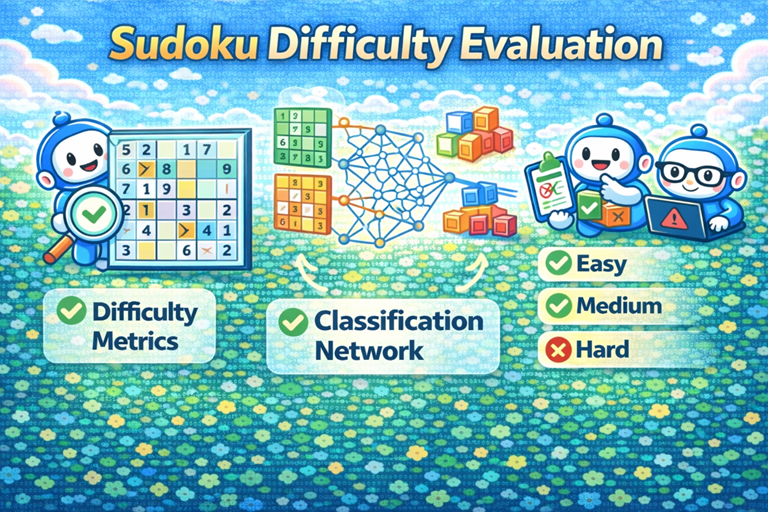
Collaborators:This research systematically investigates Sudoku difficulty assessment based on real-world human solving experience. We designed and implemented the Cloud Sudoku mobile application to collect large-scale player-solving records and establish a public dataset with human-perceived difficulty metrics. The resulting framework integrates data collection, metric design, and empirical validation, providing a standardized and realistic foundation for developing and evaluating Sudoku difficulty-rating algorithms. -
Sports Science
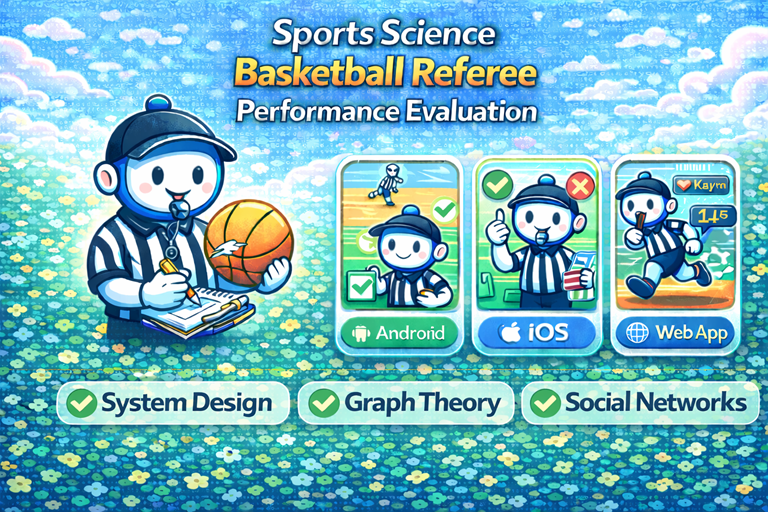
Collaborators: Prof. Wen-Wei Hsieh, Prof. Ying-Chen ChenThis research focuses on performance analysis and intelligent management for basketball officiating systems, integrating data analytics with practical system design. Using machine learning to analyze referee data from Taiwan’s Super Basketball League, we found that teamwork has a greater impact on overall officiating performance than individual ability. Building on these findings, we developed RefBot, a chatbot system that automates referee management workflows and improves the efficiency of game assignments and league administration.
Dr. Sheng-Wei Wang
王聲葦
swwang@nuu.edu.tw
National United University
Office: B2-504
Google Scholar
Network Science Lab.
[GitHub]